How Restaurant Uniforms Shape Guest Perception and Staff Confidence
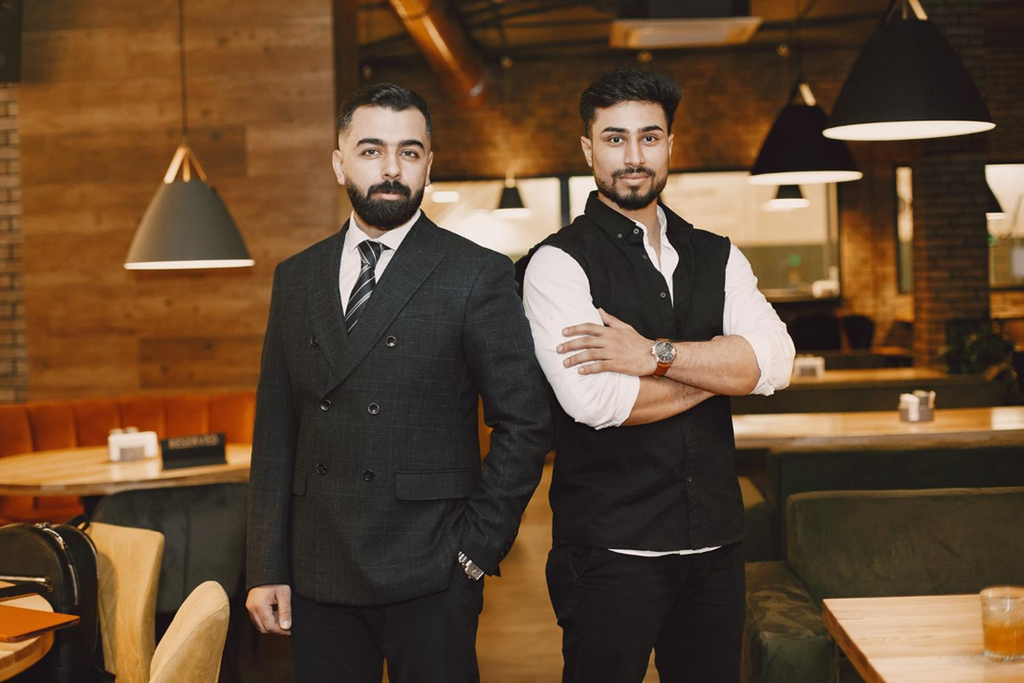
When a guest walks into a restaurant, they form an impression within seconds. Long before they have seen the menu or tasted a dish, they have absorbed a visual signal about what kind of experience they are about to have. The cleanliness of the space, the music, the lighting and the posture of the staff all contribute, but the most immediately legible signal of all is what the team is wearing.
Restaurant uniforms are not dressing up for the sake of appearances. They are a functional communication tool that operates on multiple levels simultaneously: they signal brand identity to guests, create a sense of belonging and shared purpose among staff, and establish clear visual distinctions between roles that make the service experience more legible and efficient.
What guests read into staff appearance
Guests are not consciously analysing uniforms in the way that a designer or operator might. But they are drawing conclusions from them. A front-of-house team dressed in well-fitted, cohesive, thoughtfully designed workwear signals that the establishment cares about detail, that the experience has been considered as a whole, and that the staff are professionals in a space they take pride in. These inferences happen quickly and they stick.
The inverse is equally true. A mismatched or ill-fitting uniform, or the absence of any unifying dress code, signals inconsistency. Guests may not be able to articulate exactly what feels off, but research on the psychology of service environments consistently finds that visual coherence correlates with perceived quality and trustworthiness. In a category where guests are making emotional decisions as much as practical ones, that matters.
The staff experience: confidence and identity
The effect of a well-designed uniform is not only external. The experience of wearing it changes how staff move through the restaurant and how they engage with guests. A uniform that fits well, functions for the work being done, and represents the establishment’s aesthetic with conviction gives staff a clear professional identity to inhabit. It removes the cognitive load of deciding what to wear and replaces it with a signal: when this is on, I am in role.
This is particularly significant for new team members. A uniform that conveys professionalism helps people feel competent before they have fully found their footing. For front-of-house staff in particular, where every interaction with a guest is a moment of professional performance, that psychological scaffolding is not trivial.
What distinguishes a good restaurant uniform from a generic one
The difference between a uniform that works and one that merely fulfils the function is primarily in the quality of the design decision. Generic workwear solves the minimum problem: it creates a consistent visual identity and meets the practical requirements of the job. A well-designed custom uniform does more than that. It is an extension of the restaurant’s identity: its materials, its colour palette, its attention to detail and the care it puts into craft.
Companies like Stock Mfg Co approach restaurant uniforms as a design problem grounded in brand identity, developing custom presentations that incorporate the restaurant’s aesthetic, the needs of each position and the requirements of the service environment. The process begins with understanding the brand story and producing samples that the team can test for fit, function and durability before any order is finalised.
This approach is particularly valuable for establishments where the design of the space, the concept of the menu and the positioning of the brand have all been carefully considered. A uniform that was chosen casually is the one visible element that can undercut the rest of the investment. A uniform that was designed with the same rigour as the interior is one that reinforces it.
Functionality and durability: what the back of house and the floor demand
A uniform that looks good in a showroom but fails in service is not a good uniform. The practical demands of restaurant work are significant. Front-of-house staff move constantly through a range of temperature zones, interact with food and drink in ways that test fabric resilience, and spend long shifts on their feet. A good server uniform needs to hold its shape through a double shift, resist stains where possible, and feel comfortable enough that it does not become a source of distraction during service.
The National Restaurant Association has noted in its workforce research that staff satisfaction is closely correlated with how well their physical work environment supports their performance, and workwear is a meaningful part of that environment. Uniforms that cause discomfort, that restrict movement or that degrade quickly create low-level friction that accumulates across a shift and contributes to the attrition that hospitality operators consistently identify as a major operational challenge.
Building a uniform programme that lasts
Establishing a uniform programme involves more than an initial design decision. The long-term practicality of the programme depends on fabric quality and durability, the availability of replacement pieces that maintain consistency over time, and a process for introducing new team members to the programme without significant lag or visible inconsistency.
The best uniform programmes are also flexible enough to accommodate the range of body types on a team. A programme that looks cohesive on the models in the design presentation but fits poorly on half the actual team has not solved the problem. Operators whose uniform partners offer genuinely inclusive sizing and a process for ensuring proper fit for every hire avoid the patchwork appearance that can emerge as a team grows.
The operational case for investing in restaurant uniforms is ultimately straightforward: the return on the investment comes from every guest who forms a positive first impression, every team member who shows up to a shift with a clearer sense of professional identity, and every interaction that is marginally better because the visual environment supporting it was considered rather than arbitrary.